
#StartupsEverywhere: Ani and Joshua, Co-Founders, asters
This profile is part of #StartupsEverywhere, an ongoing series highlighting startup leaders in ecosystems across the country. This interview has been edited for length, content, and clarity.
Security's New Frontier
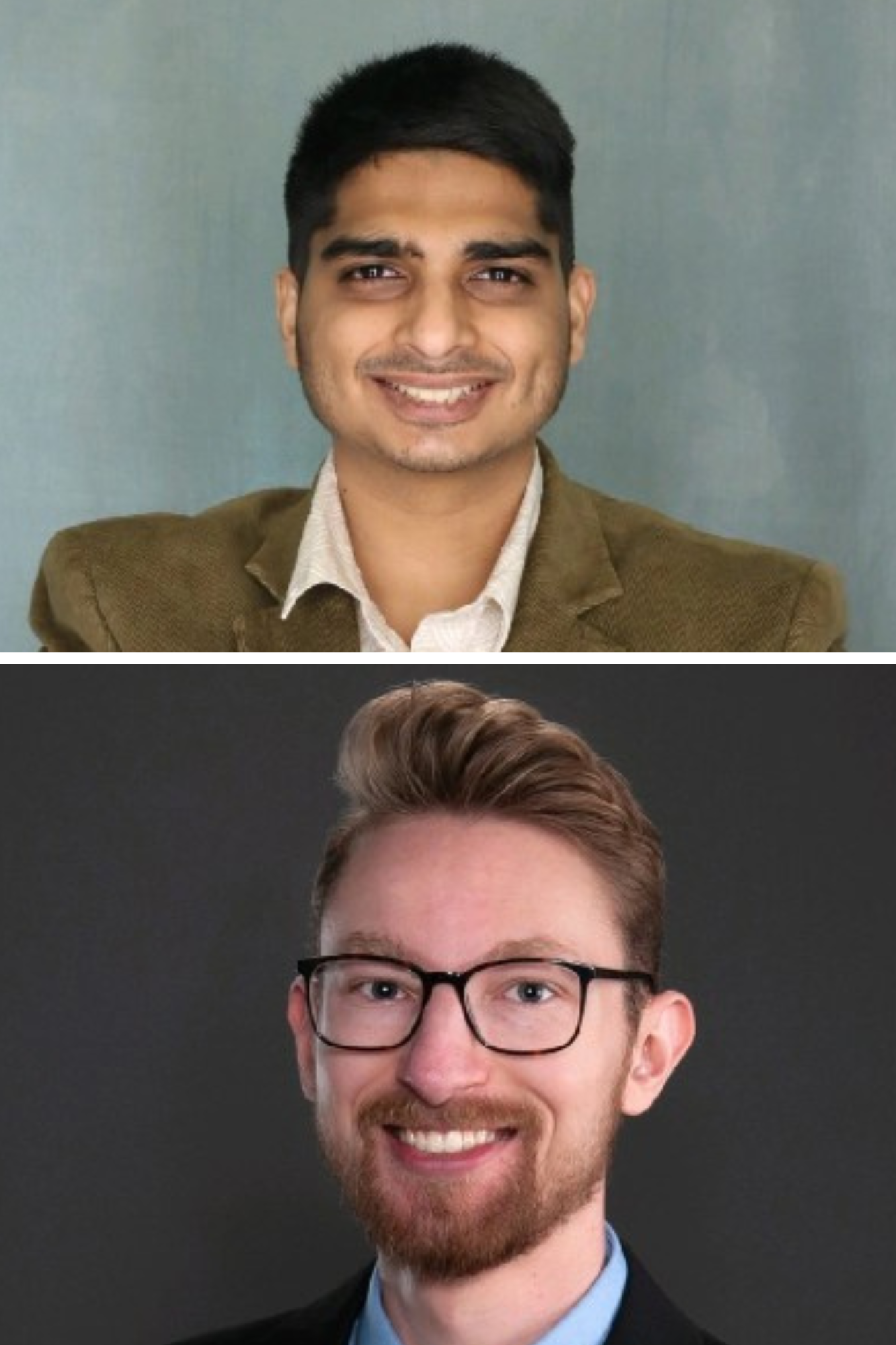
Co-founded by Aniirudh "Ani" Ramesh and Joshua Waite, asters specializes in next-generation AI-based simulation products. We sat down with Ani and Joshua to discuss what led them to found asters, the work they do, the impacts of the closing federally funded projects and programs, hurdles related to federal and state funding, and what the future of asters will entail.
What led you to asters?
Joshua: My background is in academia; after earning my Ph.D. at Iowa State in December, I became a postdoc at the Translational AI Center. Ani, a Ph.D. student at the University of Tennessee, and I began collaborating in 2019-2020 on a National Science Foundation (NSF) funded project for active shooter tracking and evacuation routing. I led the computer vision work, and Ani led evacuation route optimization.
What is the work you all are doing at asters?
Ani: We're building a software platform that helps organizations manage security for large-scale events. Our product leverages a customer's existing data, including floor plans, incident reports, and historical data, to simulate various scenarios using AI.
We're offering a tiered product to meet different customer needs. The first is a basic text-based support system, the second is a 2-D floor plan visualization with discrete simulations, and the third is a high-fidelity 3-D model that allows for more realistic visualization and planning.
Joshua: The NSF project then was extended to a project with a Department of Homeland Security (DHS) Center of Excellence, SENTRY, which is a program aimed to facilitate applied research in collaboration with industry input. This is what led us to found a startup. Continuing to build on this foundation, presently we're more focused on providing proactive decision-making support for emergency preparedness at prominent venues with complex environments and large crowds (e.g., sports stadiums, convention centers, and transit hubs). Our goal is to utilize AI to assist security teams in exploring 'what-if' scenarios to identify vulnerabilities and prepare for specific events.
How have you relied on an incubator as you prepare to launch?
Ani: We participate in the Polsky Center for Entrepreneurship and Innovation's accelerator program, which boosts our credibility, and provides us with computing credits we would not have access to otherwise. The program is open to anyone and culminates in a chance to pitch for venture capital (VC) funding. The mix of security expertise from the DHS excellence center and tech advice from Google and the University of Chicago puts us in a strong position to get started.
What has your experience been with fundraising in the Midwest?
Joshua: We plan on staying in the Midwest, since we see alignment between physical security and the region's risk-averse and cautious investment approach. While we can still approach coastal VCs, our immediate ecosystem values caution.
Ani: Elsewhere, tech deemed “good enough” might attract funders regardless, but here they want to see traction, which is challenging to gain since it requires potential customers to share vulnerabilities. We've secured $25,000 from the Polsky Center program, a significant contributor to building our prototype.
Are there any issues you’ve ran into regarding government funding?
Ani: The recent shutdown of DHS Excellence Centers has meaningfully disrupted our business operations. Our academic research partnership with private companies relied on the DHS Excellence Center as the authorized information-sharing liaison. Losing this connection makes finding new customers challenging.
While federal funding surrounding grants exists, the bureaucratic nature of these programs operates at a pace which doesn’t meet the fast-moving nature of startups, with barriers such as complex paperwork and vague timelines
Joshua: State-level funding for small businesses and pilot programs tends to be conditional, acting more as an add-on than a standalone source. You rarely find simple, small grants provided directly to individuals. Instead, many state programs piggyback on larger funding—like federal SBIR grants—offering matching funds or a slight boost after you've secured the primary, harder-to-get funding source.
Ani: The Illinois Innovation Voucher program offers startups research partnership opportunities through university collaborations, providing up to $50,000 in funding. Although the system shows potential, its complicated nature poses challenges. Increasing accessibility of funding programs for startups will increase their efficacy.
What are your goals for asters moving forward?
Joshua: Looking ahead, our goal for asters is clear; we need to land our initial customers and use that validation to grow, enabling us to expand our team and launch a more refined product based on real-world feedback from pilot programs.
Long-term, we see opportunities for market expansion. While currently focused on civilian applications, our platform also has many parallels in the defense space. We plan to explore these avenues, but recognize that it will involve navigating added layers of red tape. International expansion is also on the table; however, we would need to consider the added regulations and export controls.
All of the information in this profile was accurate at the date and time of publication.
Engine works to ensure that policymakers look for insight from the startup ecosystem when they are considering programs and legislation that affect entrepreneurs. Together, our voice is louder and more effective. Many of our lawmakers do not have first-hand experience with the country's thriving startup ecosystem, so it’s our job to amplify that perspective. To nominate a person, company, or organization to be featured in our #StartupsEverywhere series, email advocacy@engine.is.
